 Advanced
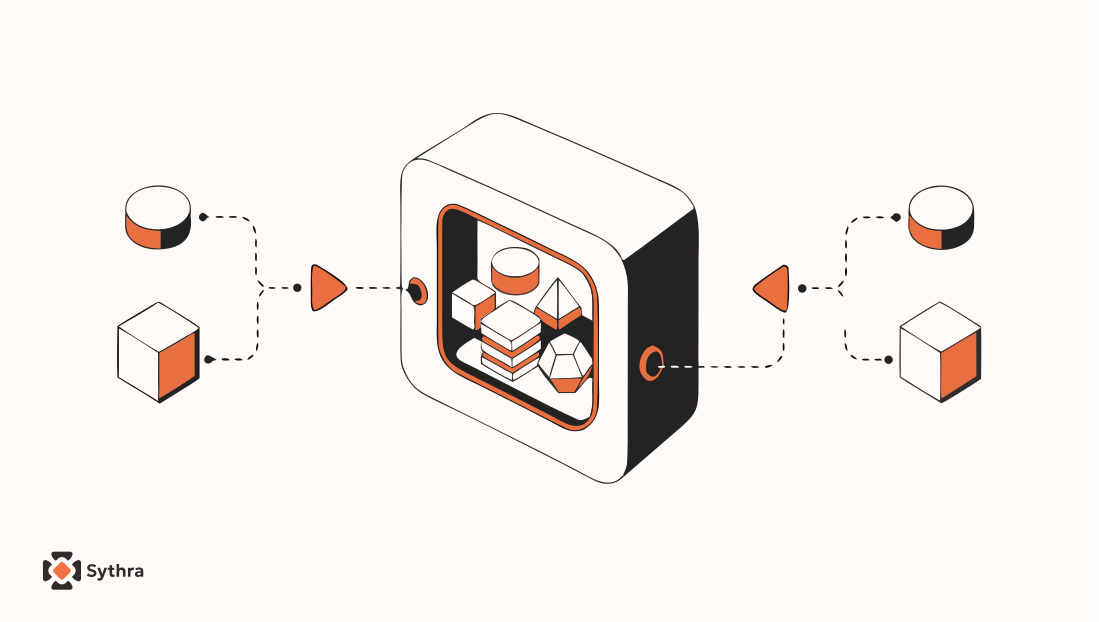
Production ML architecture: training-serving skew
The model is the small part. Training-serving skew, feature freshness, shadow deploys, drift detection, and monitoring that catches decay.

Tag
Every article tagged Machine Learning. For a structured path, browse Learn.
AdvancedThe model is the small part. Training-serving skew, feature freshness, shadow deploys, drift detection, and monitoring that catches decay.
 Advanced
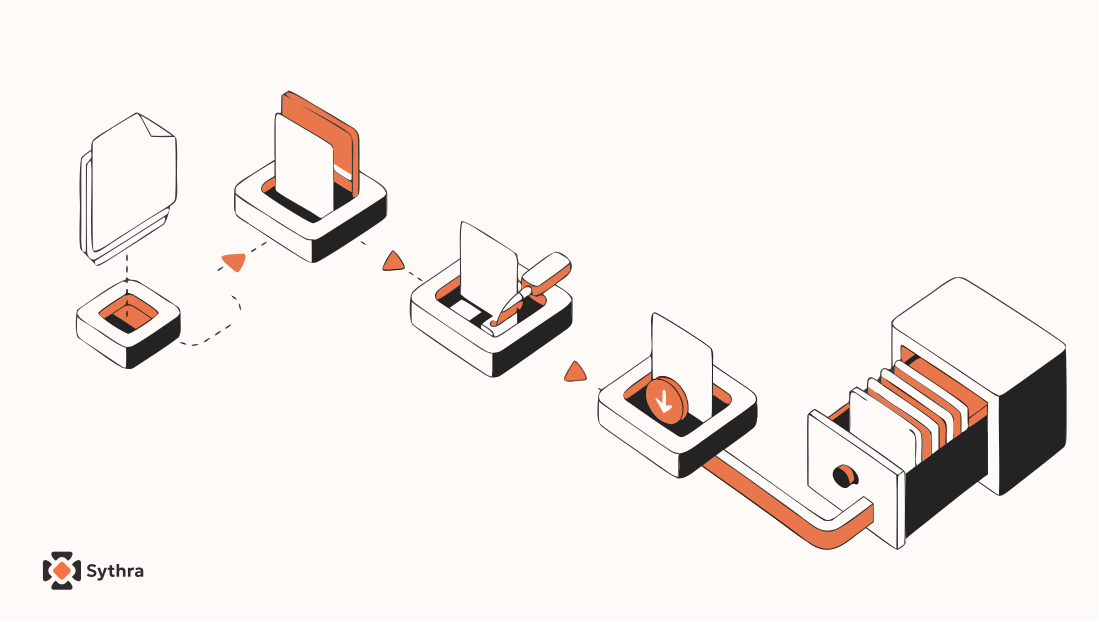
Splitting correctly stops the obvious leak. Target encoding, feature stores, label windows and proxy features leak anyway — how to find each.
 Advanced
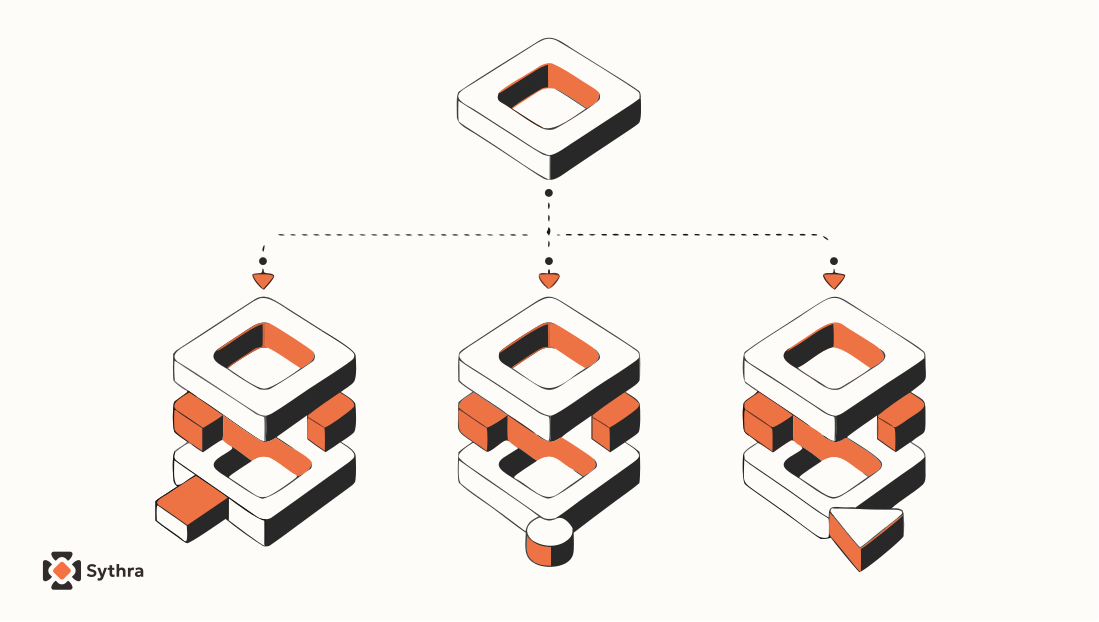
Nine errors behind great offline metrics and bad production models: random splits on time series, threshold-free metrics, tuning on the test set.
 Advanced
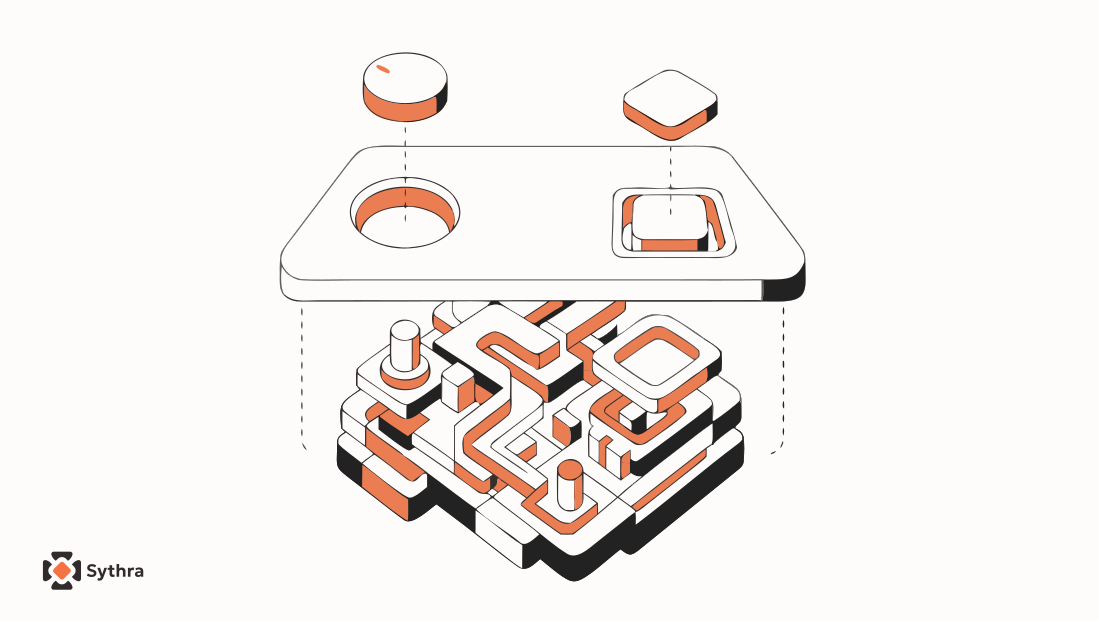
Convolution forward and backward with no framework. The im2col trick that makes it fast, why the backward pass is a convolution too, and a net that trains.
 Advanced
A working decoder-only transformer in 120 lines. Pre-norm, residual streams, why the MLP is 4x wide, weight tying, stable initialisation.
 Advanced
Queries, keys and values with real numbers. Why the scaling factor is sqrt(d_k), what multi-head attention buys, and how causal masking works.
 Advanced
The geometry of embedding space: why you normalise, what dimensionality really buys you, and the anisotropy problem nobody mentions.
 Advanced
Vibes do not scale and BLEU measures nothing you care about. Eval sets, LLM-as-judge without fooling yourself, and the biases that corrupt it.
 Advanced
Most RAG fails at retrieval, not generation. Build a golden set, measure recall@k, run chunking experiments, add a reranker when data says so.
 Advanced
ANN search trades accuracy for speed. How HNSW graphs and IVF-PQ quantisation work, which knobs move recall, and how to choose an index.
 Advanced
Fine-tuning teaches behaviour, RAG supplies facts. A decision framework, the LoRA maths, real costs, and the cheaper ladder to climb first.
 Beginner
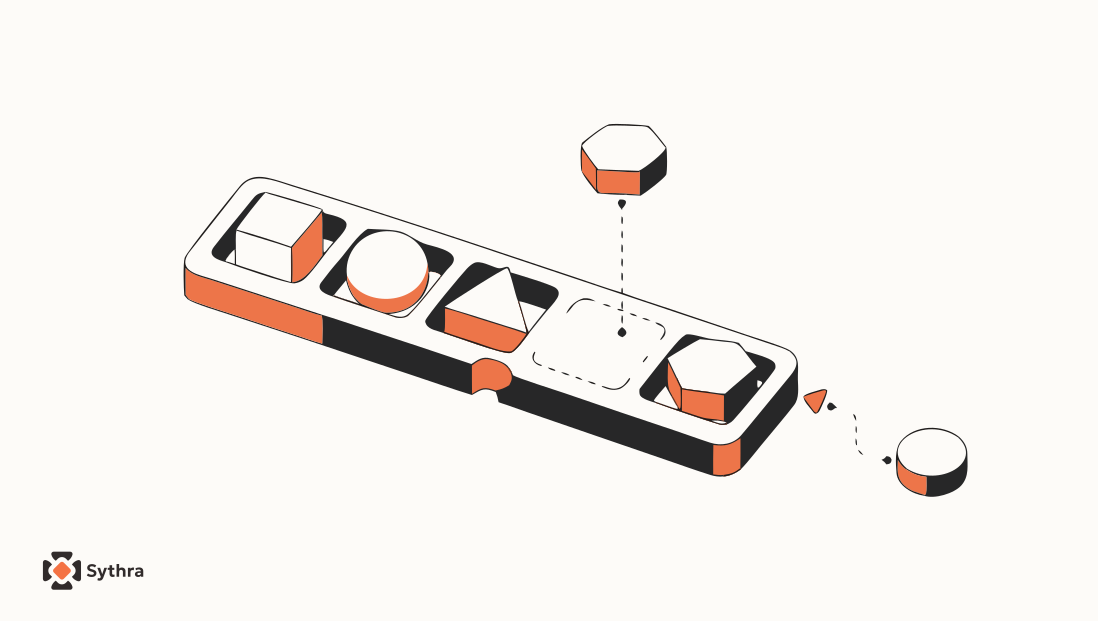
Your dataset is a matrix, a model is a matrix, and training is matrix multiplication repeated. Six operations, drawn out, with the ML job each one does.
 Intermediate
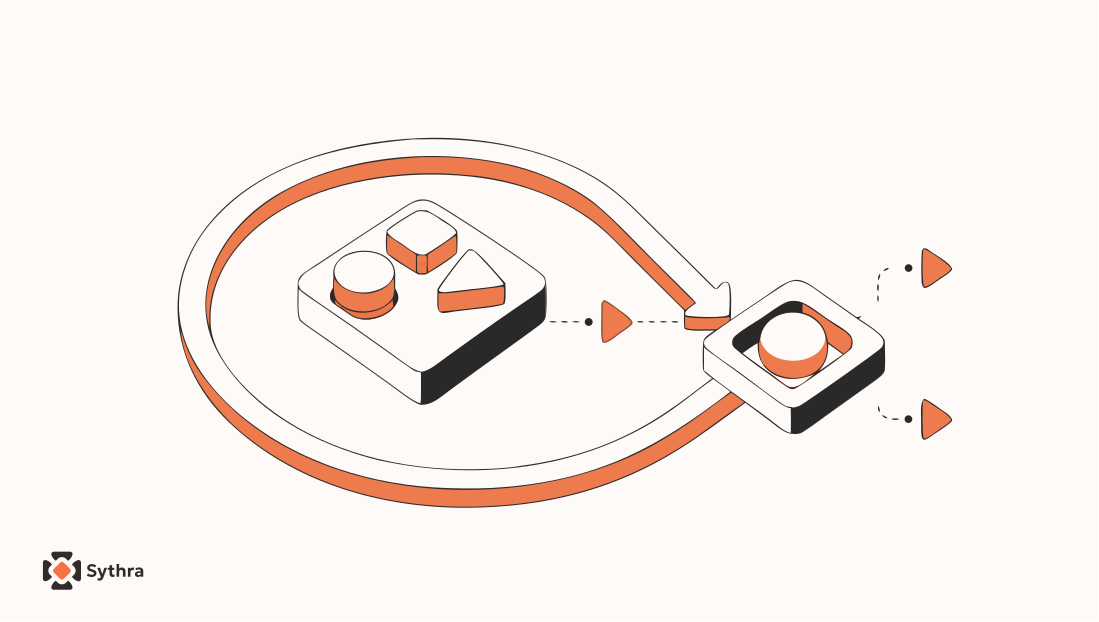
Why A @ B and A * B give completely different answers, what "shapes not aligned" really means, and the one rule that makes matrix shapes click for good.
 Beginner
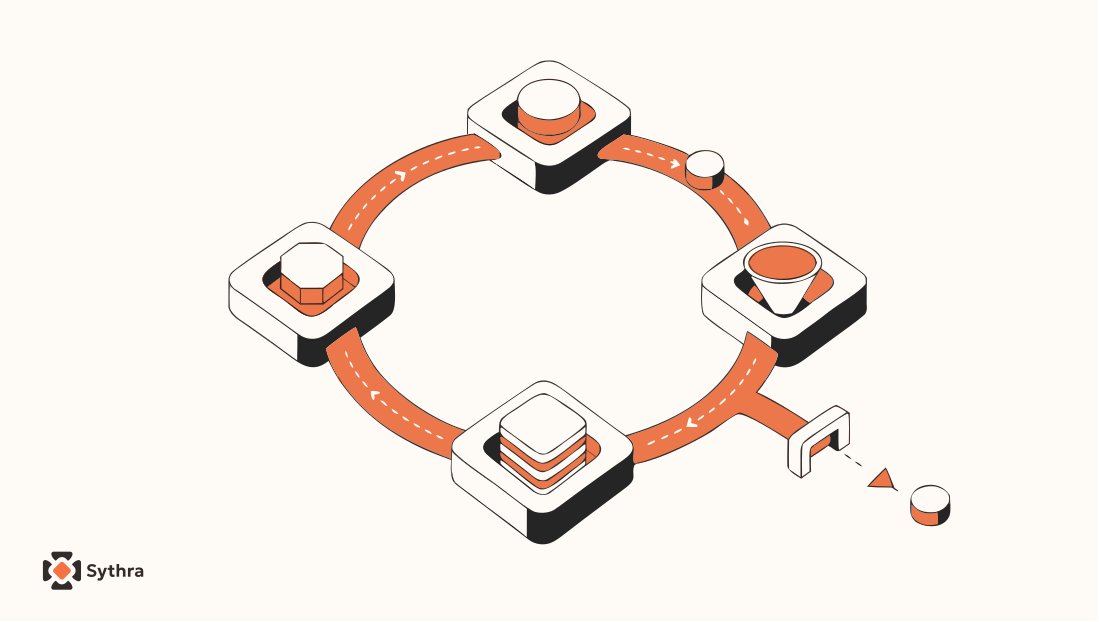
Free GPUs, offline work, real debugging — each tool wins somewhere. An honest comparison plus the setup that gets you the benefits of all three.
 Intermediate
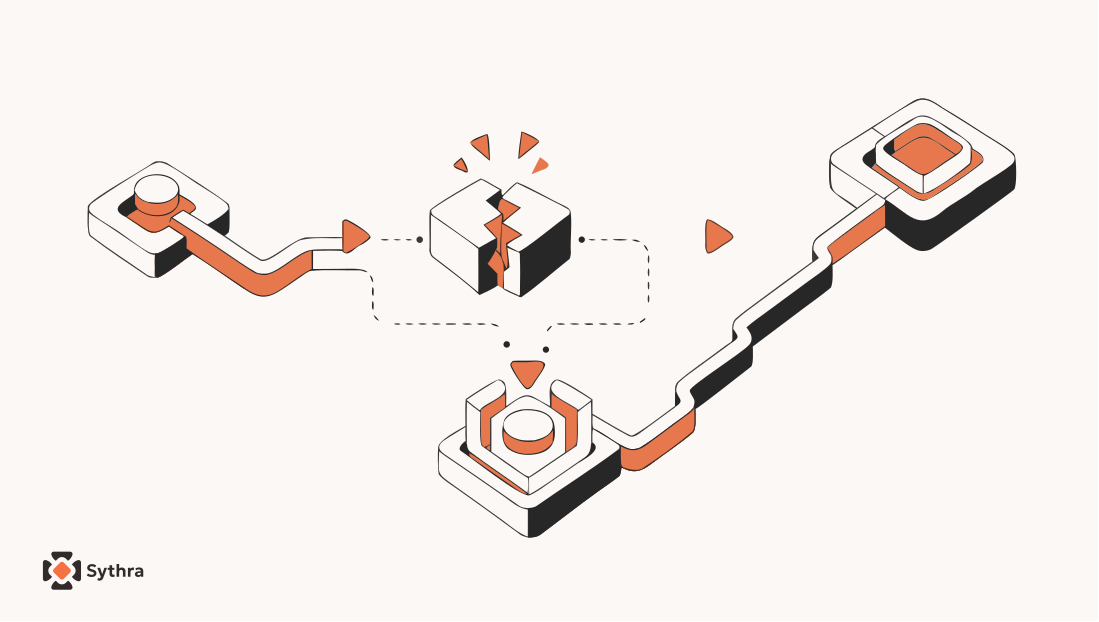
Ten pandas fixes for the problems every real dataset has: broken headers, duplicate rows, mixed types, silly outliers and inconsistent categories.
 Beginner
Overfitting means your model memorised the training data instead of learning from it. Here are the three checks that reveal it and the fixes that work, in order.
 Beginner
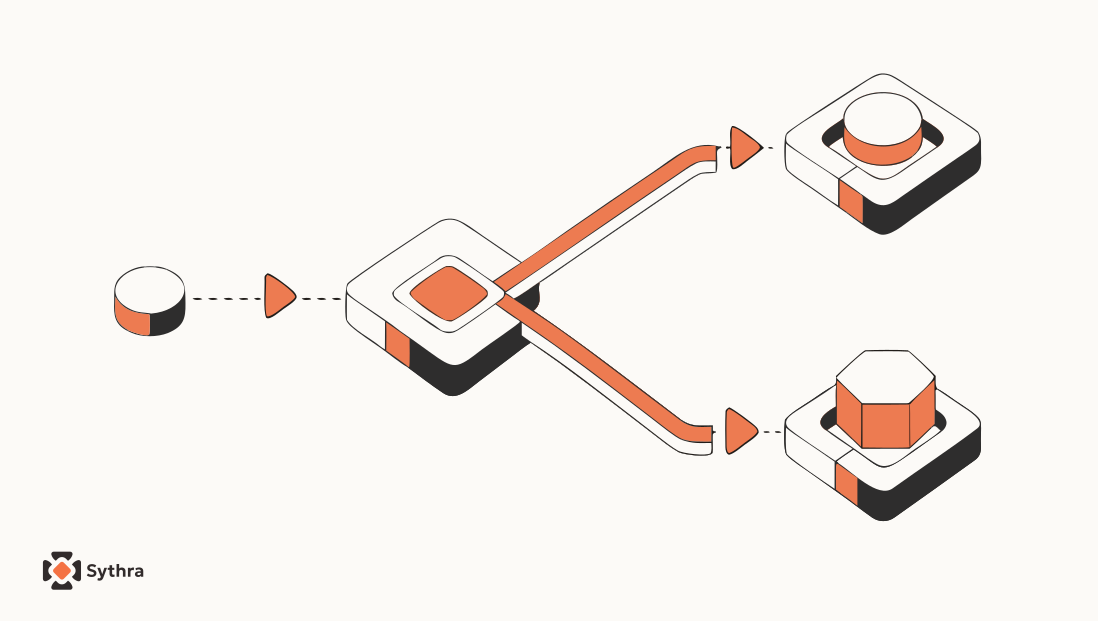
Accuracy hides the mistakes that matter. Learn to read a confusion matrix, tell precision from recall, and pick the metric that fits what your model is actually for.
 Beginner
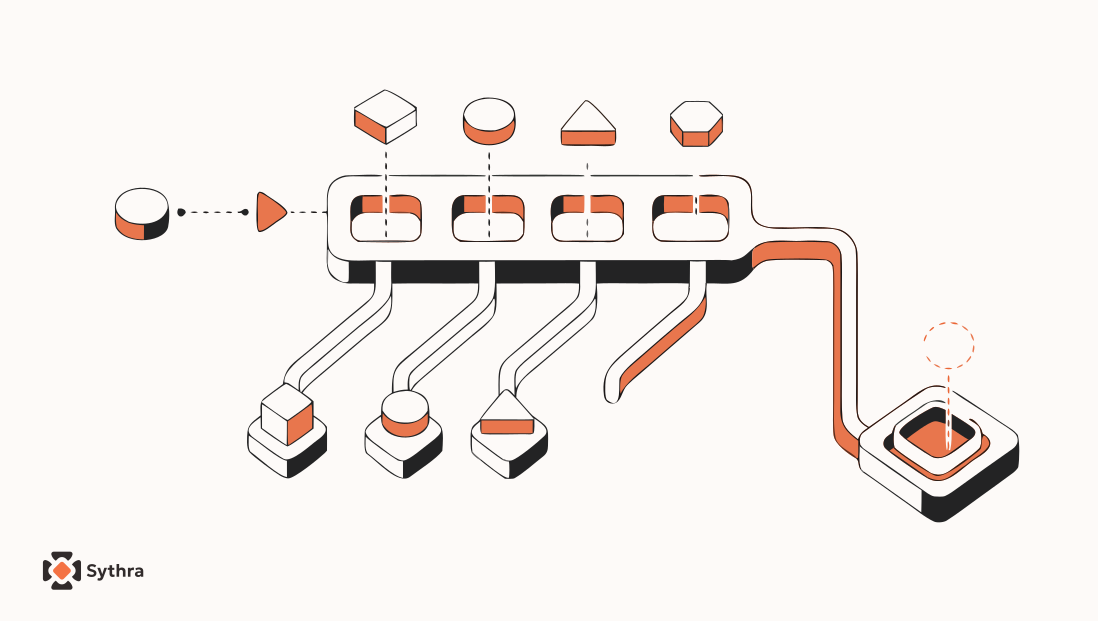
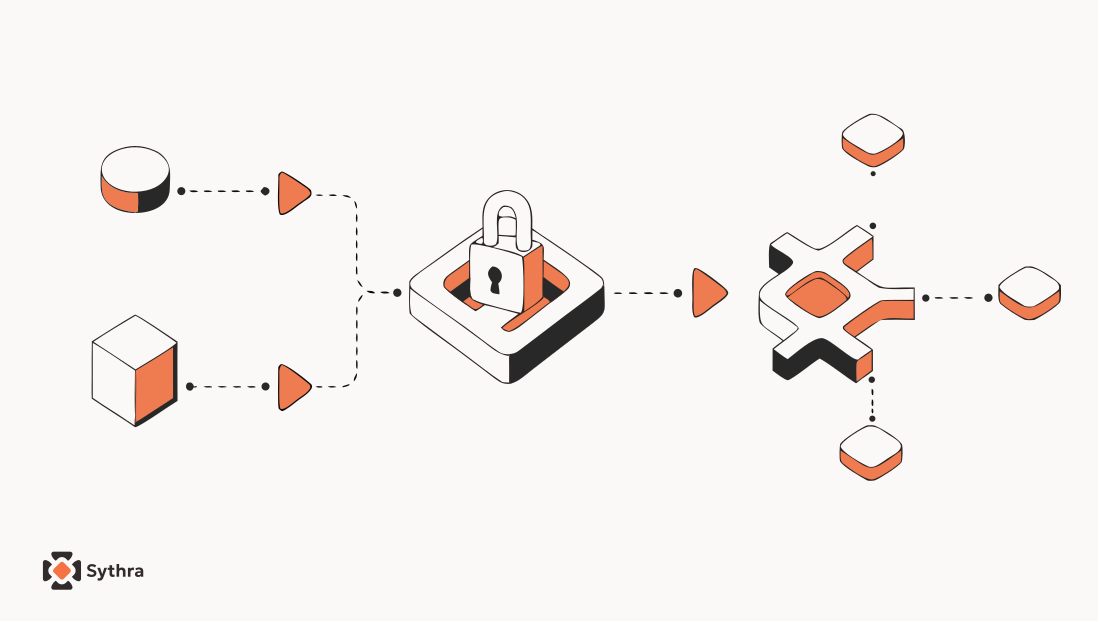
A 99% accurate model that fails in production usually has data leakage. Learn the four ways test data sneaks into training and how a scikit-learn Pipeline prevents all of them.
 Beginner
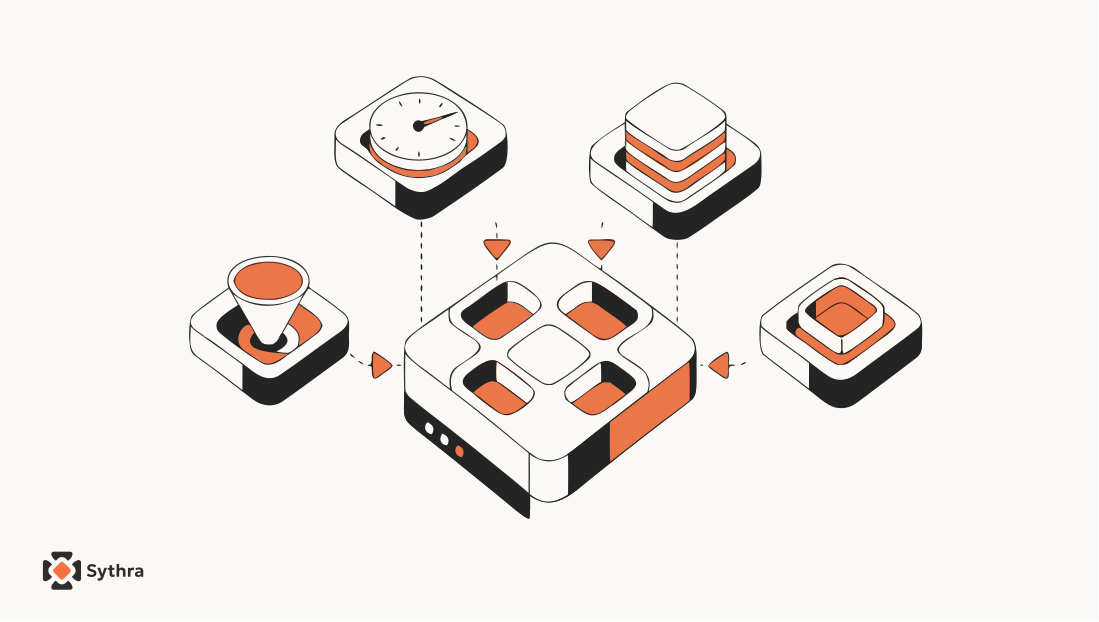
No maths degree required. Load data, split it, fit a model, check the score — the four steps every scikit-learn project uses, explained line by line.
 Beginner
This error means one cell in your data is not a number. Learn how to find the exact bad row in pandas and clean commas, currency symbols, percent signs and blanks for good.
 Beginner
You don’t need every Python trick. Master these seven patterns and you’ll read — and write — almost any beginner ML notebook with confidence.
 Beginner
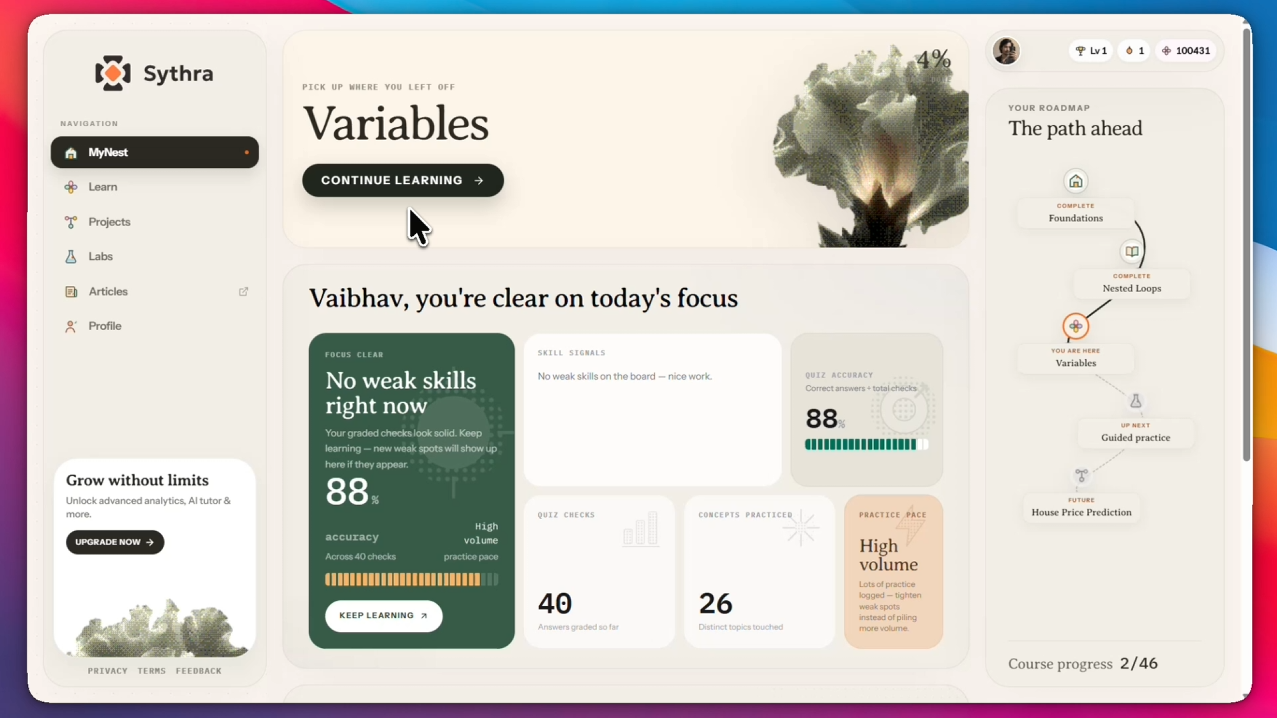
Sythra is a machine learning education platform — structured courses, an AI tutor that teaches, in-browser labs, and Project Studio so you learn ML by building.